Miss Your Train, Catch the Skyline: London’s Accidental Station Viewpoints
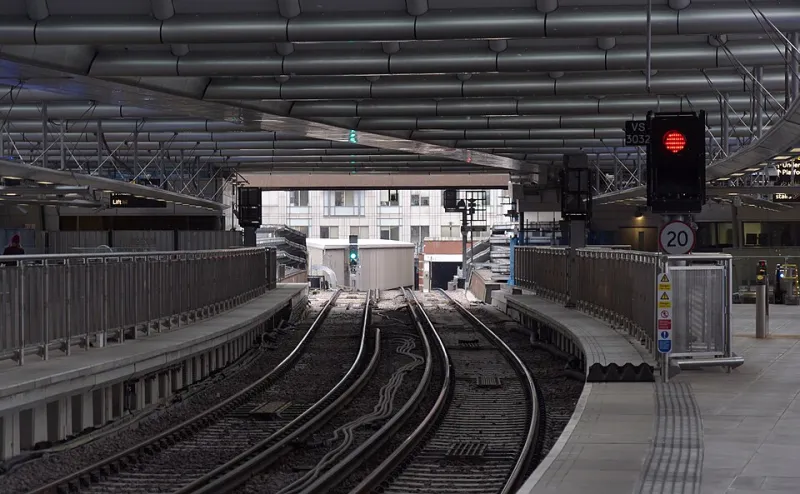
Photo: mattbuck (category), CC BY-SA 3.0, via Wikimedia Commons
London’s railway stations were not designed as viewpoints. That is exactly why they work. A viaduct here, a footbridge there, a platform that suddenly clears the rooftops — and you have a free panorama with a departure board attached. The trick is knowing which stations reward a missed connection, where to plant yourself, and when the sun is doing something useful.
This is a ranking, but it is also a practical guide. Some of these views need a ticket. Some do not. None of them are official attractions, so treat the platforms like places where people are trying to catch trains first and admire the city second.
1. Blackfriars: the Thames-side platform that feels almost illegal
Blackfriars is the obvious winner because the station sits on a bridge. The Thameslink platforms run across the river, and the view opens up in both directions: west towards the London Eye and the Houses of Parliament, east towards Southwark Bridge and the Shard. It is the closest thing London has to standing in the middle of the Thames without getting wet.
Where to stand: any platform will do, but the best spot is the river-facing edge between the waiting shelters, roughly mid-platform. Do not glue yourself to the glass at the far ends; the middle section gives you the widest sweep.
When the light works: late afternoon in autumn and winter, when the sun is low and the river turns a dirty gold. Morning is better for the eastward view towards the Shard, which catches the first clean light.
Access: you need a ticket to reach the platforms. If you are not travelling, walk Blackfriars Bridge instead — the view is lower and busier, but it is free. In 2026, station access follows normal first-train-to-last-train hours, so do not turn up hoping for a midnight panorama.
2. London Bridge: the concourse view that costs nothing
London Bridge station is a masterclass in accidental architecture. The upper concourse, all swooping roof and glass, gives you a framed view of the Shard and the City beyond. You are not on a platform, so you do not need a ticket, and you are not blocking anyone’s dash for the 08:14.
Where to stand: the upper concourse near the Shard-side exits, where the escalators rise into the open. Look north-east for the Shard, north for the City cluster.
When the light works: early morning, before the concourse fills with commuters, or a clear winter afternoon when the low sun bounces off the glass.
Access: the concourse is open during station hours. It is a station, not a viewing deck, so keep moving if it is busy. The platform views are gated, but the concourse is the free hit.
3. Heron Quays: the DLR deck with a Canary Wharf frame
Heron Quays is not glamorous. It is a DLR stop in the middle of the docklands, all steel and steps and wind. But the elevated platforms give you a clean look at the Canary Wharf towers, and because many DLR stops are unbarriered, you can often walk up without passing a gate. You still need a ticket to travel; you just do not need one to stand and look.
Where to stand: the south end of the platform, looking north towards One Canada Square. The towers fill the frame without the usual street-level clutter.
When the light works: clear mornings, when the glass towers go silver, or blue hour in winter when the office lights start to grid up.
Access in 2026: DLR station access varies. Some stops have gates, some do not. Heron Quays is usually open, but do not treat it as a public viewing platform. If staff ask you to move on, move on.
4. Waterloo East: the viaduct sneak
Waterloo East is a proper accidental viewpoint. The platforms sit on a viaduct above the South Bank, and the view opens towards the City and St Paul’s. It is not as dramatic as Blackfriars, but it is quieter and stranger — a slice of cathedral dome above the rooftops, with trains sighing past.
Where to stand: the eastern end of the platforms, where the viaduct clears the surrounding buildings. Look north-east for the City.
When the light works: winter mornings, when the sun rises behind the City and the dome sits in silhouette.
Access: platforms require a ticket. The station is small, so do not linger at the barriers. If you want the view without a fare, the South Bank riverside walk below gives you a related but lower perspective.
5. West India Quay: the quiet DLR panorama
West India Quay is the DLR stop that people pass through without looking up. The platforms are elevated, the area is open, and the view takes in the docks, the towers and the water. It is not the greatest skyline in London, but it is one of the easiest to enjoy without a ticket or a crowd.
Where to stand: the north end of the platform, facing the water and the Canary Wharf cluster.
When the light works: late afternoon, when the low sun catches the water and the towers start to warm up.
Access: often unbarriered, but check before you go. In 2026, contactless and Oyster remain the default, and station hours are tied to service hours. Do not assume a platform is open just because the lights are on.
The rules of station viewing
A station is not a rooftop bar. There is no host, no menu and no one to ask you to leave nicely. So: stand clear of the yellow line, keep your bag with you, do not block stairs or ticket gates, and never climb anything. If a member of staff says the platform is closed, it is closed.
Also, check before you travel. Engineering works, station upgrades and event crowd control can change access at short notice in 2026. The best station views are the ones you stumble on, but the worst ones are the ones you plan badly.
If you only have time for one, take Blackfriars with a ticket and London Bridge without one. That is the whole game: one proper platform panorama, one free concourse frame, and a city that looks better when you are technically on your way somewhere else.