When the Sun Skims the Rooftops: London’s 2026 Winter Solstice from Above
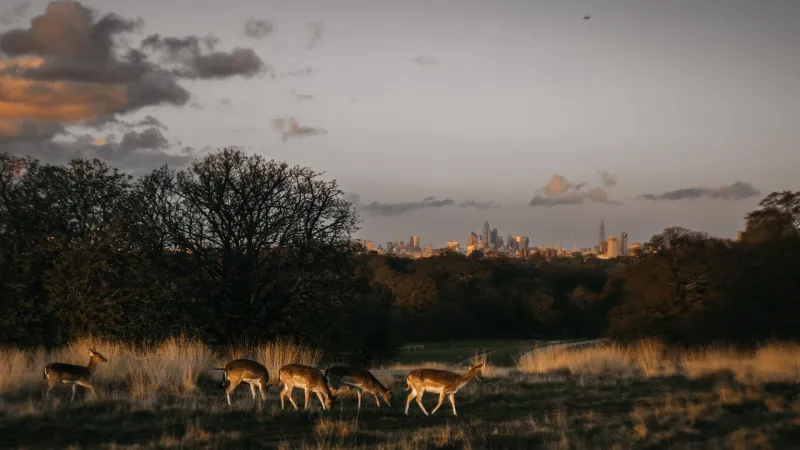
On 21 December 2026, London does not so much set the sun as lose it behind a roofline. The solstice instant falls at 20:50 GMT, long after dark, but the useful drama happens hours earlier: a pale, low disc sliding across the southern sky, lighting the city sideways and stretching every chimney pot into a long finger of shadow.
This is the day when height matters differently. In summer, a high viewpoint gives you distance. In midwinter, it gives you angle. You are not looking down on London so much as looking across it, along the grain of the streets, through gaps between buildings and into the brief, amber window before the light goes.
The geometry of a very low sun
In London on the winter solstice, the sun reaches only about 15 degrees above the horizon at solar noon, which falls at roughly 11:58 GMT. By mid-afternoon it is already skimming. Sunset arrives at about 15:53 GMT, with the sun setting close to south-west, around 231 degrees. That low angle is why the solstice feels less like a sunset and more like a slow side-light being dragged across the capital.
The effect is strongest where the skyline is broken: the City cluster, the Shard, the Palace of Westminster, the telecom towers and the ragged roofline of the South Bank. From high ground, the sun can slip between these shapes and briefly illuminate surfaces you never notice at midday. Street grids show up as dark channels. Terraces become long, repeating patterns. Even a row of ordinary chimneys can look architectural.
The timing window
Sunrise on 21 December is around 08:04 GMT, but the best solstice viewing is an afternoon affair. The photographic golden window runs roughly from 14:45 to 15:53, when the light turns warm and the shadows lengthen fastest. If you want the sun itself, rather than the afterglow, plan to be in position by 15:15. The final 20 minutes before sunset are the most dramatic, but they are also the most rushed.
After sunset, civil twilight ends at about 16:35, leaving a blue-grey afterglow that can be excellent for silhouettes. From roughly 16:35 to 17:10 the sky may hold a band of colour while the city lights come on. This is the quiet second act. It is also when park gates, car parks and some viewpoint access points start to become relevant, so check opening times before you commit to a late exit.
Five high places that make sense
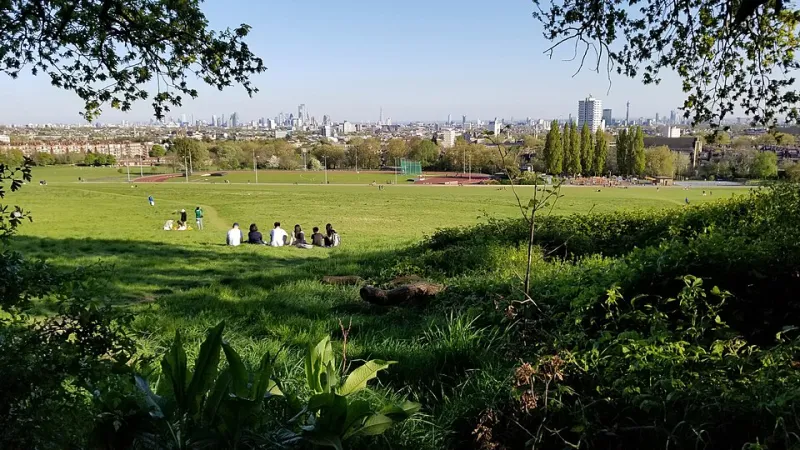
Parliament Hill, Hampstead Heath. The classic south-facing view over central London. At solstice, the low sun rakes across the Heath and picks out the City towers in the distance. Arrive early enough to walk up from the pond side; the slope slows you down and the light changes while you climb.
Primrose Hill. Smaller and busier, but the view south is beautifully layered. The solstice sun can turn the Regent’s Park terraces into a dark foreground and leave the distant skyline glowing. It is a short climb, which makes it a sensible choice if you are fitting the afternoon around work.
Greenwich Park and One Tree Hill. From the higher ground, the view west over central London is wide enough to watch the sun drop behind the city rather than behind a single building. One Tree Hill gives you the long avenue and a sense of ceremony. The park is large, so give yourself time to leave before the gates close.
Alexandra Palace. The view south from the terrace is one of the best free panoramas in north London. In winter the sun sets well to the right of the main City cluster, so the effect is less about a single alignment and more about the whole southern horizon turning amber. The walk up from the station adds a proper high-walk feel.
Stave Hill, Rotherhithe. A smaller, stranger viewpoint with a sculpted model of the old docks below. The low sun catches the Thames and the Canada Water towers, and the view west has enough gaps to make the solstice light feel deliberate. It is less famous than the Heath, which is often the point.
Camera notes for a very low sun
A long lens helps. Something in the 70–200mm range lets you compress the skyline and make the most of the sun’s low angle without asking anyone to move. A wider lens is useful for the long shadows across open ground, but resist the temptation to shoot everything wide: the solstice is about compression and silhouette.
Expose for the highlights. The sun will blow out; that is fine. Bracket your shots if you want detail in the buildings. A tripod is useful in the afterglow, but check local rules and keep it close to you so it does not become a trip hazard. Bring a lens cloth: cold air and warm breath on a viewfinder are part of the experience. And do not use a drone here. Public viewpoints are shared spaces, and the rules are stricter than many people assume.
The residential clause
Many of London’s best high places sit next to, or inside, residential areas. The solstice brings out tripods, picnics and people standing on walls. Keep noise down, do not block doorways or pavement, and do not treat a neighbour’s balcony or window as part of your composition. If a viewpoint is closing, leave when asked. The view belongs to everyone, but the street below belongs to someone.
The shortest afternoon rewards a bit of planning. Be in place by 15:00, pick a view with a clean south-western horizon, and let the sun do the slow work of turning London’s rooftops into a long, dark map.