The Climb Is the Point: London’s Steepest Streets and the Free Views They Hand You
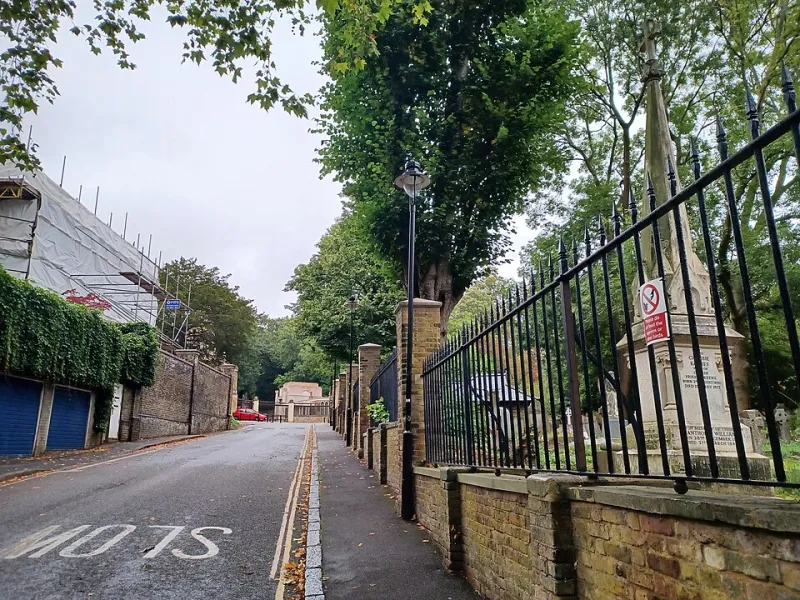
Photo: Simon Burchell, CC BY-SA 4.0, via Wikimedia Commons
London doesn’t do mountains. What it does do is the sharp little street that turns a corner, tips upward, and suddenly hands you a rooftop panorama you didn’t expect. These aren’t hikes. They’re ten-minute lung tests, the kind of climb you can do in a coat and still make the pub afterwards. Here are the steepest public streets worth seeking out, ranked by how much effort they ask and what you get at the top — all free, all reachable by Tube, train or bus.
How We’re Judging a Good Climb
A steep street is only worth it if the top delivers. We’re looking at four things: the gradient (roughly, by eye and by calf), the pavement (wide and smooth, or narrow and root-ridden), the payoff (a bench, a skyline, a park), and the escape route (can you carry on, or do you have to turn round?). None of these are full-day walks. Most are done in under twenty minutes, which is exactly the point.
1. Swain’s Lane, Highgate — the cemetery-wall climb
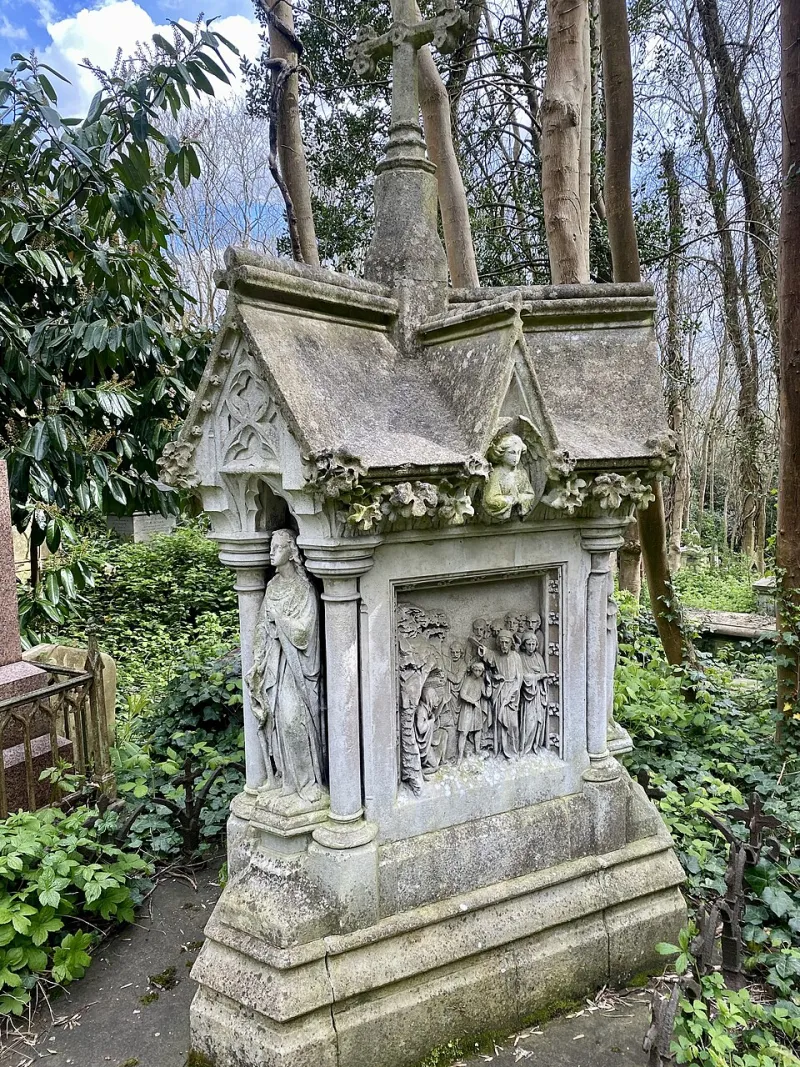
Swain’s Lane runs from Highgate Road up to Highgate Village, and it feels steeper than it looks on a map. The pavement is narrow in places, the tree roots are ambitious, and the cemetery wall gives the whole thing a pleasantly gothic edge. You’re climbing beside one of London’s most famous Victorian burial grounds, opened in 1839, and the street itself has the narrow, hedged feel of an old country lane that got swallowed by the city.
Gradient snapshot: roughly 1 in 10, with a sharper pinch near the top. Pavement: narrow, uneven, occasional mud after rain. Payoff: Highgate Village for coffee, then Waterlow Park for a free skyline across north London. Effort: 7/10.
Start at Archway station, walk up Highgate Hill, then take Swain’s Lane. It’s a proper little climb, and the reward is less about one big view and more about the sudden quiet at the top.
2. Richmond Hill — the classic with a protected view
Richmond Hill is the London steep street that everyone knows, and it earns the reputation. The climb from Richmond station up to the top is short but insistent, and the pavement is good enough that you can do it in ordinary shoes without thinking about your ankles. The view from the top — the Thames curling away, the trees of Terrace Gardens, the whole soft green panorama — is protected by the Richmond, Petersham and Ham Open Spaces Act 1902, which is a very London way of saying: this view is not going anywhere.
Gradient snapshot: around 1 in 7 on the steepest section. Pavement: good, wide in places. Payoff: the famous Richmond Hill view, free, with benches. Effort: 6/10.
It’s the best beginner’s climb on this list. Do it on a clear afternoon, then walk down through Terrace Gardens rather than back on the road.
3. Crooms Hill and Point Hill, Greenwich — two climbs, one park
Greenwich gives you a double bill. Crooms Hill is reputed to be the oldest street in the area, with a Roman road in its DNA, and it climbs steadily past Georgian houses towards the edge of Greenwich Park. Point Hill, just to the east, is shorter but sharper — a proper little ramp that gets the heart going. The pavements are mixed: some good stretches, some cobbles, some awkward cambers.
Gradient snapshot: Crooms Hill around 1 in 9; Point Hill steeper, closer to 1 in 6 in places. Pavement: mixed, with cobbles and uneven edges. Payoff: Greenwich Park, the Observatory, and free views back over the Thames and the city. Effort: 8/10.
This is the one for anyone who wants a short, vigorous climb with a proper park at the top. Start from Cutty Sark DLR, go up Crooms Hill, loop through the park, then drop down Point Hill for a different angle.
4. Alexandra Palace Way — the north London ramp
The climb from Wood Green up to Alexandra Palace is not pretty in the postcard sense, but it is honest. The road bends and rises, the pavement is decent, and the reward is one of the widest free panoramas in London. Ally Pally opened in 1873, burned down, rebuilt, and later became the home of the BBC’s first regular television service — the mast is still there, and so is the terrace.
Gradient snapshot: around 1 in 10, steady rather than savage. Pavement: good. Payoff: the terrace and park at Alexandra Palace, with a full sweep of the city. Effort: 7/10.
It’s a bus-friendly climb too: several routes grind up the hill, so you can walk one way and ride the other if your legs have opinions.
5. Heath Street and Willow Road, Hampstead — the spa-town climb
Hampstead’s streets climb in layers. Heath Street and Willow Road take you up towards Whitestone Pond, and the whole area still carries the ghost of its 18th-century spa days, when Londoners came here to take the waters and pretend they were in the country. The pavements are generally good, the shopfronts are distracting, and the climb is gentle enough to do with a coffee in hand.
Gradient snapshot: roughly 1 in 12, with short steeper bits. Pavement: good. Payoff: Hampstead Heath, Parliament Hill and one of the best free skyline views in London. Effort: 5/10.
This is the one to save for a lazy weekend. Climb slowly, then keep going across the Heath to Parliament Hill for the big finish.
The Quick Ranking
| Street | Rough gradient | Effort | Pavement | Payoff |
|---|---|---|---|---|
| Swain’s Lane, Highgate | 1 in 10 | 7/10 | Narrow, uneven | Highgate Village and Waterlow Park |
| Richmond Hill | 1 in 7 | 6/10 | Good | Thames panorama |
| Crooms Hill / Point Hill | 1 in 9 / 1 in 6 | 8/10 | Mixed, cobbles | Greenwich Park |
| Alexandra Palace Way | 1 in 10 | 7/10 | Good | Ally Pally terrace |
| Heath Street / Willow Road | 1 in 12 | 5/10 | Good | Hampstead Heath |
The Verdict
If you want the biggest view for the least effort, go to Richmond Hill. If you want a proper short lung-buster with a park at the top, Greenwich is the one. If you want the quiet satisfaction of a climb that feels hidden, take Swain’s Lane. None of them will take you more than half an hour, and all of them end with the city spread out below you — which is the whole point of a steep street in London.