The Lid Comes Down: Chasing Winter Sunshine on London’s High Ground
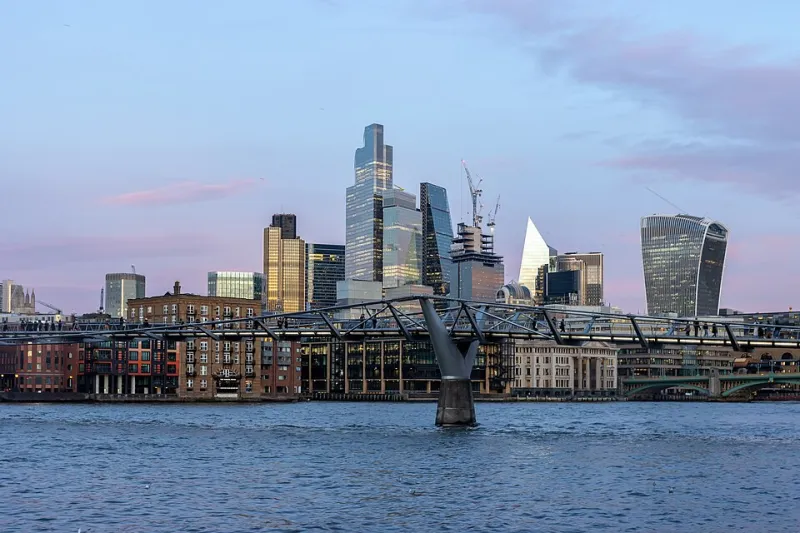
Photo: Photograph by Mike Peel (www.mikepeel.net)., CC BY-SA 4.0, via Wikimedia Commons
Some mornings in London, the city does something quietly ridiculous. You step out of a Tube station into cold grey soup, can barely see the opposite pavement, and then a friend texts from Hampstead to say the sky is blue and the sun is on their face. They are not lying. They are simply standing above the lid.
The upside-down weather day
A temperature inversion is exactly what it sounds like: the normal rule — warmer near the ground, colder as you climb — gets flipped. Cold, dense air settles into the basin of the city while a layer of milder air sits on top. Long clear nights, light winds and high pressure let the ground radiate heat away. The coldest air pools in low spots, and whatever moisture is around condenses into fog, mist or a flat grey murk. Central London, with its warm buildings and traffic, can add its own grime to the mix, but the basic mechanism is meteorological, not magical.
The result is a city under a grey lid. The top of that lid might be only 80, 100 or 150 metres up. That is low enough for several London hills to poke through, which is why an inversion day can feel like two different cities at once: one grey and muffled, the other sharp, bright and almost alpine in spirit.
The London summits that tend to break through
The classic is Hampstead Heath. Parliament Hill is the obvious pull — that familiar view north-east across the city — but the whole ridge around Kenwood and Highgate can sit above the worst of the murk. On a good inversion morning you get the strange pleasure of looking down at a cloud sea with the Shard and the City towers rising out of it like islands.
Alexandra Palace is another strong candidate. The climb from Wood Green or Alexandra Palace station is short, and the terrace and park give you a wide northern panorama. Crystal Palace, on the southern ridge, often catches the sun while the Thames basin stays grey. Greenwich Park is lower, but One Tree Hill and the slope up from the Cutty Sark can still clear the lid on shallower inversion days. Richmond Park, Harrow on the Hill and Shooters Hill all have their moments too. None of them is guaranteed. That is part of the game.
How to spot an inversion forecast
You do not need a meteorology degree, but you do need to read the signs. Look for fog warnings, high pressure, clear skies overnight and very light winds. A dew point close to the air temperature is another clue: moisture is ready to condense as soon as the ground cools. The Met Office forecast, BBC Weather and apps such as Windy are all useful for spotting the pattern. The tell is contrast — fog forecast for central London and the Thames Valley, but clearer skies over the North Downs, the Chilterns or the higher parts of north London.
Webcams help. Check Alexandra Palace, Greenwich Park and Hampstead Heath before you leave. If the camera shows a grey blanket below and blue above, go. If it shows fog all the way, save your legs. And go early: inversions often burn off by mid-morning, so a lazy lie-in is the enemy of the bright skyline.
Planning a 2026 climb
Pick a hill with a station near the bottom. Hampstead Heath from Gospel Oak or Belsize Park; Alexandra Palace from Wood Green; Greenwich from Cutty Sark; Crystal Palace from Gipsy Hill; Harrow on the Hill from its own station. Wear warmer layers than you think you need — the top of the inversion can be colder than the grey streets below — and take a flask. A headtorch is useful if you are starting before sunrise.
If the fog wins, you have still had a good walk and a free lesson in humility. If it loses, you get one of London’s strangest and brightest winter views: the capital seen from above, with its head in the clouds and its summits in the sun.