Stillness at Altitude: London’s Cemetery Hills for a Slower Skyline
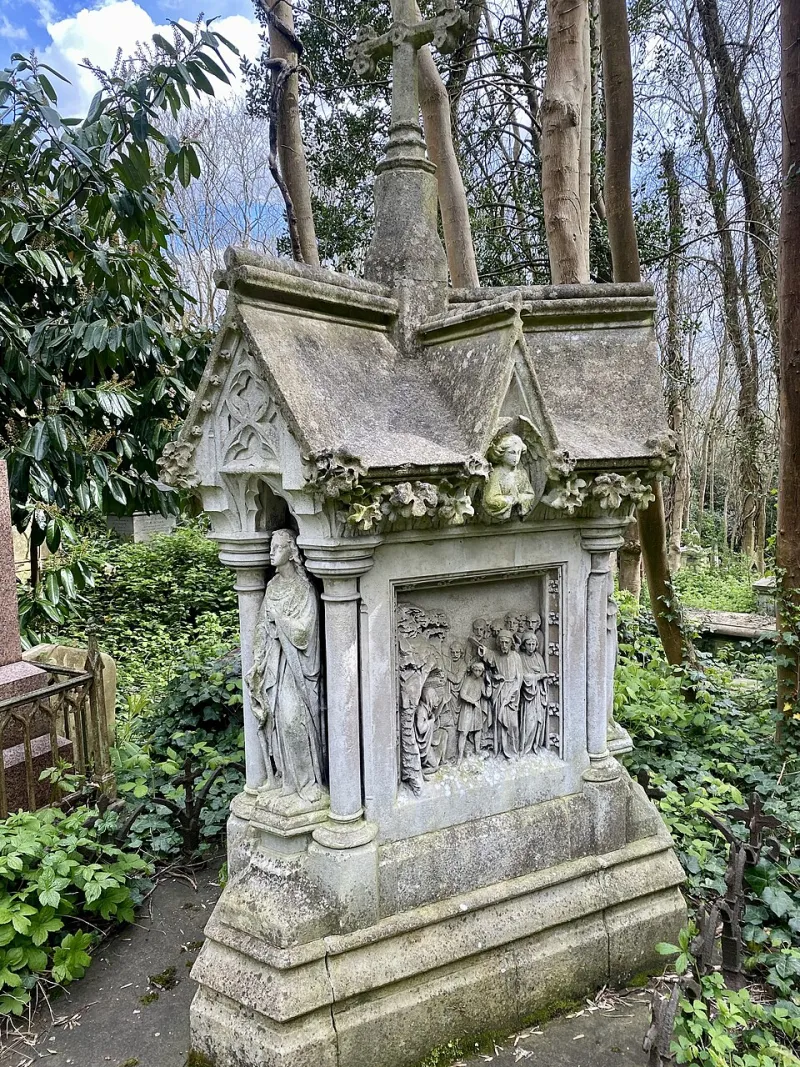
Photo: No Swan So Fine, CC BY-SA 4.0, via Wikimedia Commons
London is good at hiding its high ground. You expect the views from Parliament Hill or the South Bank, but not necessarily from behind a cemetery gate. Yet some of the capital’s most rewarding elevated walks run through Victorian burial grounds, where mature trees, crumbling chapels and steep paths combine to make places that are as much landscape as memorial.
These are not attractions in the usual sense. You don’t queue, you don’t buy a timed ticket for a viewing platform, and nobody is selling you a cocktail at the top. What you get instead is a different kind of altitude: quieter, slower, and framed by headstones rather than glass. Treat them as high walks with a purpose, and they repay the effort.
Why the dead get the best views
In the 19th century, London’s new garden cemeteries were often built on the edges of the city, on land that was cheap, well-drained and — usefully for us — frequently hilly. Highgate, Nunhead and their kin were designed as landscapes to wander, with curving paths, terraces and planting that has had 150 years to mature.
That means the high points are often surprisingly open. Trees that were once saplings now frame gaps in the skyline. Paths that were laid out for horse-drawn hearses now make excellent walking routes. And because these places are still working cemeteries, they have an atmosphere that no roof terrace can replicate: a stillness that asks you to lower your voice and, in turn, look a little longer.
Highgate: terraces, trees and a sideways glance at the city
Highgate Cemetery is the obvious starting point, and it earns the attention. The East Cemetery is the one you can visit independently, with a small admission charge and roughly 10am to 4pm opening in winter, 10am to 5pm in summer. The West Cemetery — the famous one with the Egyptian Avenue and Circle of Lebanon — is guided-tour only, and those tours are worth booking ahead if you want the full story.
For views, the East side rewards a slow loop. The ground rises, the paths narrow, and between the monuments you catch the city in fragments: a cluster of towers, a sliver of Hampstead, the pale grey of distant roofs. It is not a panorama. It is better than that — a series of small reveals that make you stop rather than sweep your phone across the horizon.
Go midweek if you can. Weekends bring photographers and tour groups, and the paths are not wide. And remember that this is an active burial ground: stay on the main paths unless a sign says otherwise, keep voices low, and don’t treat graves as props.
Nunhead: the wooded rise with a ruined chapel
Nunhead Cemetery, in south-east London, is the quieter sibling. It sits on a slope above Brockley, and the walk from the gates to the top is a proper little climb — muddy in winter, dappled in summer, always more woodland than you expect in Zone 2. The ruined chapel at the summit is the landmark, but the real prize is the view back across the city, with the Shard and Canary Wharf poking through the trees on a clear day.
Opening hours are daylight-led, so check Southwark Council’s page before you set out, especially from November onwards when the gates close early. The paths are uneven and steep in places, and after rain they can be slippery. Wear shoes you don’t mind getting dirty. There are benches near the top, and if you sit for ten minutes you’ll notice how the sound of the city falls away without disappearing entirely — a low hum rather than a roar.
The other slopes worth knowing
Highgate and Nunhead get the headlines, but they are not the only high cemeteries in London. Brockley and Ladywell Cemeteries, next door to each other in Lewisham, share a sloping site with views across the rooftops of south London. They are unpolished, overgrown in places, and all the better for it. Camberwell Old Cemetery, on the ridge by Forest Hill Road, also has its moments — long views, old trees, and a sense of being above the traffic rather than in it.
What these places have in common is that they reward a slow visit. A quick photo stop misses the point. The light changes, the birds come and go, and the skyline reveals itself in pieces. Give them an hour and they start to feel less like a detour and more like the main event.
Practicalities and etiquette
Before you go, check opening times. Most cemeteries close at dusk or earlier in winter, and gates are locked promptly. Bring a torch in the darker months — some paths are unlit. Accessibility varies enormously: Highgate’s East Cemetery has some level paths but also slopes and uneven ground; the West Cemetery tours involve steps and rough terrain. Nunhead is steep and can be muddy. If you need step-free access, it is worth checking individual cemetery websites or calling ahead rather than assuming.
Etiquette matters more here than at a normal viewpoint. Keep to paths, don’t climb on monuments, and don’t fly drones. Dogs should be on leads. Picnics and loud music are not appropriate. If a funeral is taking place, give it a wide berth and come back another day. These are places of rest first and viewpoints second — the two roles can coexist, but only if visitors remember which one comes first.
The case for taking your time
There is a temptation, once you find a good view, to take the picture and move on. London’s cemetery hills ask you to resist that. They are not designed for efficiency. They are designed for wandering, for stopping, for noticing the way a yew tree frames a tower or the way a path curves just as the city comes into sight.
So leave the running shoes at home and bring a coat. Pick a dry afternoon, check the gate times, and walk up slowly. The view will still be there when you reach the top — and unlike the sky bars, it won’t ask you to buy a drink to enjoy it.